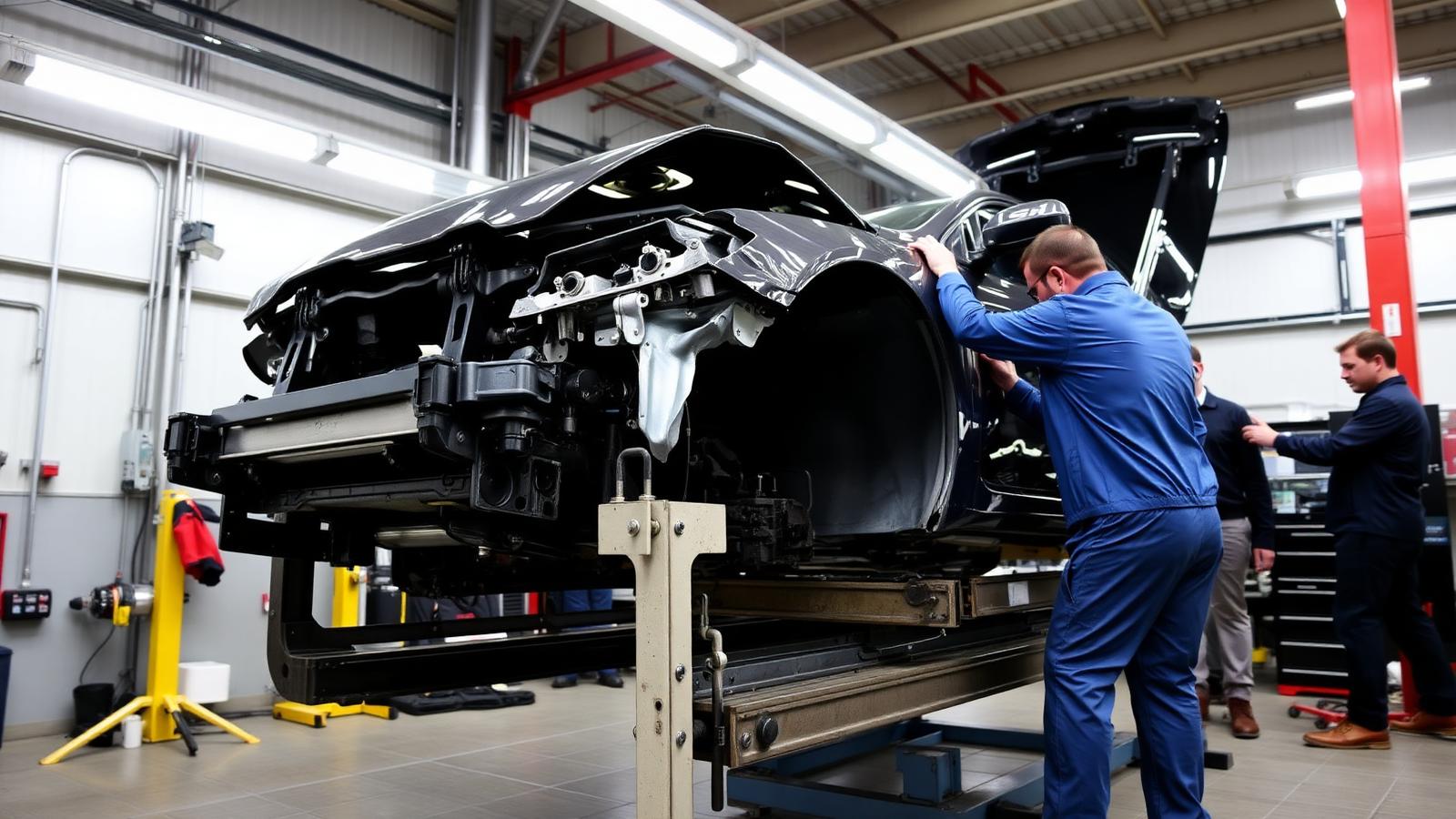
Design 1
Premium Modern Collision Center
Calm, professional presentation with structural repair imagery for shops handling higher-severity work.
collision repair website design
Seeke Media designs collision repair center websites that guide accident victims from panic to booked repair, with clear insurance, rental and towing information.
A collision repair website should immediately explain what to do after an accident, clarify the insurance claims process, list rental and towing coordination, and make calling instant. The three demos below include claim guidance, certifications, galleries and local SEO for post-accident searches.
Three genuinely different designs — not three color swaps. Open any of them full-screen, then ask us to rebuild it with your business name, services, photos and reviews.
Design 1
Calm, professional presentation with structural repair imagery for shops handling higher-severity work.
Design 2
Urgency layout with towing info, sticky call bar and insurance guidance front and center.
Design 3
Deep local content, service-area coverage and long-form insurance and certification explanations.
Someone landing on a collision repair site has usually just been in an accident. They are stressed, often standing on the side of the road or in an insurance adjuster's office, and searching on a phone for a shop that can take the car right now. A site that answers "what do I do next" in the first screen — call this number, we handle towing, here's how the claim works — converts that panic into a booked repair.
Insurance is not optional context here, it is the entire decision. Drivers want to know whether the shop works directly with their insurer, can help with a direct repair program, and will coordinate a rental car so they aren't stuck without a vehicle. Shops that spell this out plainly earn the call before a competitor who makes the visitor guess.
Because collision work involves structural and safety repairs, credibility signals matter more than in cosmetic body work. Describing industry-standard training and certification programs in general terms, along with warranty coverage and real reviews, reassures a driver that the repair will be done to a safety standard — never claim a specific certification the shop does not actually hold.
A clear "what to do after an accident" section with towing and immediate contact steps.
A page explaining direct repair programs, adjuster coordination and paperwork the shop handles.
Information on rental car coordination and towing partnerships so drivers aren't left stranded.
Plain-language explanation of the repair process, from estimate to safety inspection to delivery.
General description of industry training standards and workmanship warranty, without overclaiming.
Service-area content and schema so the shop appears for "collision repair near me" searches.
A 'just had an accident? here's what to do' page earns trust and search traffic.
OEM and I-CAR certifications should be visible, not buried.
Link to towing or rental help so drivers get everything in one call.
People find this page searching for: collision repair website design, accident repair seo, collision center website. Whatever you call it, the goal is the same: a site that ranks locally and turns visitors into calls.